
How does Swedish Fika Culture connect with embroidery creations?
This article looks at the Swedish tradition of fika and the practice of artistic crafts, especially embroidery, as ways to prevent burnout, boost creativity, and support overall well-being.
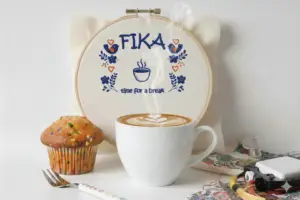
Buy this design now (link)
Handicrafts and Embroidery as “Creative Fika”
Moving from a coffee break to artistic crafts like embroidery or hand sewing shows clear similarities in structure and brain benefits. Embroidery can be seen as a form of “textile fika“, a deliberate pause that engages the hands and senses to refresh the mind. Like fika, crafts push back against the pressure to rush. Embroidery involves thousands of small, repeated movements, each like a mindful sip of coffee. This repetition and rhythm calm the nervous system, lower stress hormone levels, and reduce heart rate.
Similarities include:
-
Presence: Both fika and embroidery require being fully in the moment. In embroidery, focus is on the texture of the thread and the feel of the fabric.
-
Ritual: Both involve repeated steps, like making a drink or threading a needle, which provide comfort and a sense of control.
-
Senses: The smell of coffee and taste of a pastry in fika are like the feel of linen and the colors of thread in embroidery, grounding you in your body.
How Hands-on Activities Change Brain Chemistry
Using both hands for precise tasks, especially those that cross the body’s midline, like embroidery or knitting, stimulates both sides of the brain and releases dopamine and serotonin. This acts like self-therapy, where the hands help regulate emotions.
Research shows crafts can improve well-being and brain health. A study published in the British Journal of Occupational Therapy, based on the BBC Arts Great British Creativity Test, found that 81% of people who engaged in crafts felt happier, and 54% reported an improved mood after a creative session. According to the Get Creative Festival 2019 Feel Good Test, knitting and embroidery rank among the top ten most popular creative activities linked to improved mood and well-being.
Brain Health and Dementia
Mayo Clinic studies show that people who do crafts, like sewing, ceramics, or woodworking, from middle age into old age have a 45% lower risk of mild cognitive impairment. Even those who started at age 70 had a 28% lower risk.
Embroidery as Mindfulness and Trauma Therapy
Embroidery is often called “meditation for people who can’t meditate.” The flow state during stitching helps calm anxiety and repetitive thoughts. Historically, embroidery was used to help soldiers with war trauma regain calm and focus. Today, this process is called “emotional repair“, where stitching becomes a metaphor for bringing scattered thoughts and feelings together.
Fika and crafts also support ethical consumption and local communities.
Buying from a small artisan or making something yourself is a form of radical self-care.
How to Include Creative Breaks in Daily Life
To get the full benefit of fika and creative crafts, it’s important to create personal rest rituals. It’s not about adding another task, but changing how you think about time.
Tips for a Creative Fika:
-
Separate space: If you work from home, have a dedicated craft corner away from your computer.
-
Digital detox: Avoid screens during your break. Social media scrolling doesn’t refresh your brain like hands-on work does.
-
Focus on process, not result: In slow stitching, the rhythm and sensory experience matter more than a perfect final product.
-
Connect with nature: If possible, do your fika or embroidery outside. Nature enhances relaxation.
Fika is more than coffee, embroidery is more than thread
They are mindful choices that shape how we relate to the world and ourselves in a fast-paced life. When our hands are busy creating, our mind and heart finally have a chance to rest and be renewed in pure, unhurried creativity.
Embroidery as a Ready-Made Ritual
In a life that rarely slows down on its own, having an invitation to pause can make all the difference. Thoughtfully designed embroidery patterns remove decision fatigue and invite you straight into the process, no preparation, no pressure, just thread, fabric, and time for yourself.
Choosing embroidery inspired by Swedish fika is not about buying another product. It’s about choosing a slower rhythm, a creative pause, and a moment that belongs only to you.
***